
It is a cold October night in a brick row house in Lawrenceville. You hear a soft scratch behind the kitchen wall. The same sound shows up every fall in Bloomfield, Brookline, Squirrel Hill and Mt. Lebanon. You set traps and catch two mice. A month later, fresh droppings appear under the sink. That is when most people search for how to rodent proof a house.
Here is what we tell every homeowner. Traps remove the mice you have. Sealing stops the next ones. Skip the sealing, and you just thin the herd each winter.
Pittsburgh houses make this harder. Many have stone foundations, shared party walls, old coal chutes and pipes set in century old mortar. Hillside lots hide gaps under porches and steps. This guide shows where rats and mice get in and which materials hold. It also gives the order to do the work, with time estimates for each step.
Quick Answer
To rodent proof a house, find every gap a mouse or rat can fit through. Then close it with materials they cannot chew. A house mouse can squeeze through a hole about 1/4 inch wide. A Norway rat needs about 1/2 inch. So every crack the size of a dime matters.
Here is how to rodent proof a house in Pittsburgh, in short:
- Walk the outside first. Check the foundation, sill plate, pipes, vents, doors and roofline.
- Remove the mice inside before you seal. Otherwise you trap them in the walls.
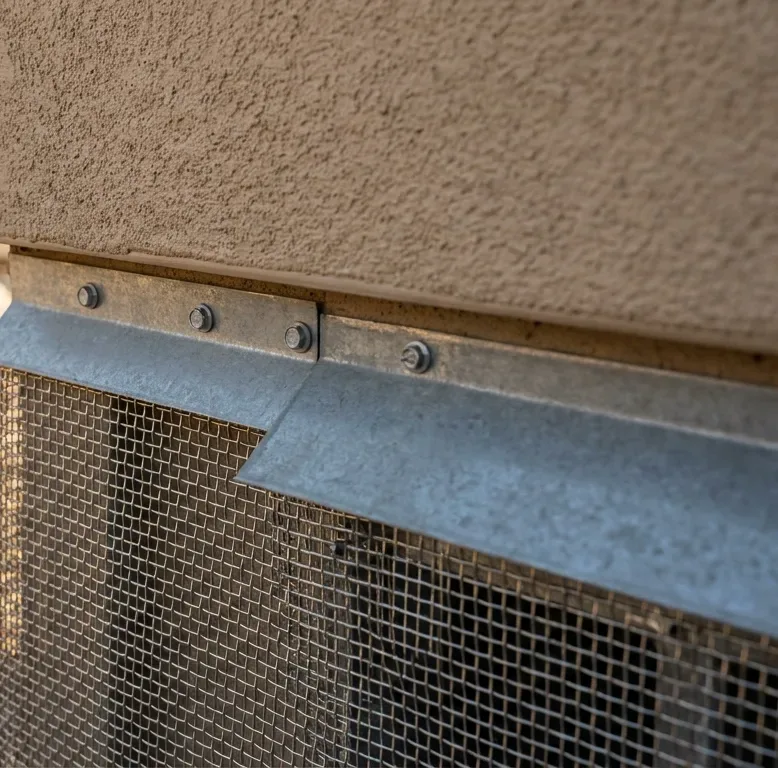
- Match the material to the gap. Use copper mesh for small holes and hardware cloth for vents. Use sheet metal for chewed edges and mortar for masonry.
- Fix the doors. Add metal backed door sweeps and new garage door seals.
- Cover the drains. Norway rats can enter through broken sewer laterals and open floor drains.
- Check again each fall. Freeze and thaw cycles open new cracks every winter.
Skip expanding foam on its own. Rodents chew right through it. Peppermint oil and plug-in sound devices do not close a single hole.
A typical DIY job takes one to three weekends. In the Pittsburgh area, professional sealing is often an added $200 to $600 for a typical house. Large stone foundation homes can cost more. Rodent Shield Pittsburgh handles full rodent proofing and exclusion in Pittsburgh.
Where Do Mice Get In? Your Exterior Walk-Around Checklist
Mice and rats get in where two materials meet. Think foundation and siding, pipes and walls, doors and frames. Walk the house in one slow loop with a flashlight, a small mirror and painter tape. Begin at the ground and work up to the roof. Mark every gap wider than a pencil. A careful first pass takes 30 to 60 minutes.
Finding the gaps is the first step in how to rodent proof a house. Mice climb well and often use gaps up high. A Norway rat is a burrower and usually comes in low.
- Foundation and sill plate. Missing mortar, loose stones, gaps under the wood frame.
- Utility lines. Gaps around gas, water, cable, electric and AC lines.
- Vents and windows. Missing dryer flaps, torn screens, rotted basement window frames.
- Coal chute. Wood boards, rusted doors, open voids.
- Doors and garage door. Daylight under the door, chewed corners, worn seals.
- Porch and steps. Holes in lattice, burrows in the soil.
- Weep holes. Open weep holes at the base of brick veneer.
- Roofline. Gaps at soffits, fascia, roof returns and gable vents.
- Yard. Branches touching the roof, woodpiles against the walls, open trash.
Gnaw marks show where rodents widened a hole. Greasy rub marks show a regular path. Fresh soil at a burrow means rats are active now. Homes near woods in Fox Chapel and Murrysville also get deer mice and white-footed mice. A professional rodent inspection finds the gaps most people miss. Learn more about the Norway rat in Pittsburgh and the house mouse.
What Are the Best Rodent Proofing Materials?
The best rodent proofing materials are ones rodents cannot chew. That means copper mesh, steel wool, hardware cloth, sheet metal and mortar. Door sweeps and vent guards close moving openings. Caulk and expanding foam only work as a finish layer over metal. Used alone, rats and mice gnaw through them, sometimes in one night.
The CDC lists steel wool, cement, hardware cloth and metal sheeting in its guide to sealing up entry points.
| Material | Best for | Strengths | Weak spots |
|---|---|---|---|
| Steel wool | Small holes around pipes and wires | Cheap and easy to pack | Rusts in damp basements, can work loose |
| Copper mesh | Small gaps in damp areas | Does not rust, holds its shape | Costs more than steel wool |
| Hardware cloth, 1/4 inch | Vents, crawl space openings, porch skirts | Strong, lets air flow | Needs screws, sharp edges |
| Sheet metal | Chewed door corners, large holes, sill gaps | Very hard to chew, lasts for years | Needs tin snips and fasteners |
| Mortar or hydraulic cement | Stone and brick foundation gaps | Durable fix for masonry | Slow, needs dry weather |
| Door sweeps, metal backed | Gaps under entry and basement doors | Closes a moving gap | Rubber only sweeps get chewed |
| Vent guards | Dryer, range and foundation vents | Keep the vent working | Fine screen on dryer vents traps lint |
| Expanding foam | Finish layer over mesh only | Fills voids, blocks drafts | Rodents chew through it alone |
Picking the right material is half of how to rodent proof a house. Pack mesh tight, at least an inch deep. Then seal the face with caulk or mortar. Heavier 19 gauge hardware cloth holds up better against rats. Our comparison of foam vs steel mesh for rodent sealing explains why it fails alone.
How Do You Rodent Proof a House, Step by Step?
Here is how to rodent proof a house in eight steps. Inspect, trap, clear the perimeter and seal the foundation. Then seal utility gaps, doors, vents and the roofline, and monitor. For a typical Pittsburgh home, plan on one to three weekends. Stone foundations and large homes take longer. Times below assume one person with basic tools.
- Inspect (1 to 2 hours). Walk the outside, then the basement, crawl space and attic. Mark every gap with tape.
- Trap first (1 to 2 weeks). Set snap traps along walls near droppings. Keep going until a few days pass with no catches.
- Clear the perimeter (2 to 4 hours). Move woodpiles and clutter off the walls. Trim branches back from the roof.
- Seal the foundation and sill plate (4 to 12 hours). Pack small gaps with mesh. Repoint larger mortar gaps.
- Seal utility penetrations (1 to 3 hours). Pack mesh around pipes and wires, then caulk the face.
- Fix doors and vents (2 to 4 hours). Install door sweeps, a garage door seal and vent guards.
- Seal the roofline (2 to 6 hours). Cover gable vents with hardware cloth. Close soffit gaps with metal.
- Monitor and clean (2 to 4 weeks). Leave a few traps set. Watch for new droppings and gnaw marks.
Do not skip step two. A mouse sealed inside a wall may chew through drywall or die there. If that happens, see our guide to dead rat smell.
How Do You Seal Mouse Holes in Stone Foundations?
To seal mouse holes in a stone foundation, rake out loose mortar and pack deep voids with copper mesh. Then repoint the joint with mortar or hydraulic cement. Mesh alone falls out of rough stone. Cover big sill plate gaps with sheet metal. Work in dry weather above freezing so the mortar cures properly. Large walls may need a mason.
Stone foundations are common in Polish Hill, Bloomfield, the North Side and much of the East End. Many are rubble stone set in lime mortar. Over a century, that mortar crumbles. The result is a wall full of hidden tunnels.
Copper is our pick here because it does not rust in a damp basement. One caution: very hard modern cement can damage soft old stone or brick over time. A mason who works on old masonry can match the mortar.
Freeze and thaw cycles reopen gaps each winter. Our guide to freeze and thaw rodent entry covers spring checks. For the inside view, see basement and crawl space rodent control.
How Do You Rodent Proof a Row House With Party Walls?
In a row house, mice move between homes through the shared party wall, basement and attic. Seal your side first. Close pipe holes through the party wall and gaps around joist pockets. Then check the top of the wall in the attic. Talk to your neighbors too. Exclusion works best when both homes seal and trap at the same time.
Row houses define Lawrenceville, the South Side Flats, Polish Hill and Troy Hill. Many share one masonry wall. Some share an open attic run. Mice do not care about property lines.
Joist pockets are a top spot. These are where floor joists rest in the masonry, and mortar often falls away there. If your neighbor traps and you do not, their mice may move to you. We often coordinate with both owners in attached homes in Lawrenceville and the South Side.
What Should You Do With an Old Coal Chute?
Seal an unused coal chute. Many Pittsburgh homes still have one, often closed with a wood board or a rusted iron door. Rats chew through wood and squeeze past warped metal. Brick the opening in with mortar, or fasten heavy sheet metal over it. Then seal every edge with mesh and mortar. A board alone will fail.
Many Pittsburgh homes heated with coal for decades. The chutes stayed behind after the switch to gas. Outside, look for a small iron door near the ground. Inside, look for a boarded opening in the basement wall. Check old milk doors and abandoned vent holes the same way. They are small, forgotten and often wide open.
How Do You Rodent Proof Porches and Hillside Steps?
Rats burrow under porches, decks and concrete steps because the soil is dry and hidden. Close the gaps with 1/4 inch hardware cloth. Bury it about a foot deep and bend the bottom outward in an L shape. Rats dig down, hit the mesh and give up. Then seal the joint where the porch or steps meet the house.
On hillside lots in Mt. Washington, Brookline and Beechview, the downhill side of a house often sits high. That leaves a dark void under the porch or rear deck. It is ideal rat habitat.
For the L-footer, dig a trench about 12 inches deep along the open side. Fasten hardware cloth to the porch frame. Run it down the trench and bend the last 6 to 12 inches outward. Backfill and tamp the soil. Back old lattice with hardware cloth too. For burrows already in the yard, see sewer and yard rat control.
How Do You Seal Garage Doors and Entry Doors?
Most doors leak at the bottom and the corners. For entry doors, install a metal backed sweep or adjust the threshold so the gap is under 1/4 inch. For garage doors, replace the worn bottom seal and add guards at the side corners. To test your work, look for daylight from inside with the lights off.
Attached garages are a top entry point in suburbs like Mt. Lebanon, Bethel Park and Cranberry. The garage holds bird seed, pet food and trash. That makes it a buffet with an easy door.
Use sweeps with a metal or brush strip, since rubber alone gets chewed. Cover chewed wood at the base of a door frame with sheet metal. Add a sweep to the door between the garage and the house. Then move seed and pet food into metal cans with tight lids.
How Do You Seal Utility Penetrations, Vents and the Roofline?
Seal pipe and wire gaps by packing copper mesh deep around each line, then caulking the face. Fit vents with metal guards that keep air moving. Cover gable vents with 1/4 inch hardware cloth. Close soffit and fascia gaps with sheet metal. Never cover a dryer, furnace or gas vent with fine mesh. That can create a fire or fume hazard.
Utility penetrations are the gap we find most often. Installers drill a hole bigger than the pipe and leave it open.
- Gas meters. Seal around the pipe at the wall only. Never loosen or tamper with the gas line.
- Dryer vents. Use a rodent resistant cover with a flap. Fine screens clog with lint.
- Weep holes. Do not fill them solid, since they drain water. Use weep vents or a small piece of mesh.
- Roofline. Check soffits, roof returns, gable vents and chimney flashing.
Roof work is risky, so leave it to a pro if ladders make you nervous. Mice in the roofline often end up in the attic insulation. See attic cleanup if you find droppings up there.
Can Rats Get In Through Floor Drains and Sewer Lines?
Yes. Norway rats live in sewers and can follow a broken sewer lateral into your basement. They can also come up through open floor drains and loose cleanouts. Fit unused floor drains with solid metal covers and keep cleanout caps tight. Burrows near where your sewer line leaves the house can point to a broken pipe. A plumber can confirm it with a camera.
Many sewer lines in Pittsburgh carry both sewage and storm water. Rats travel these pipes, especially near the Three Rivers. The Allegheny County Health Department explains this in its handout on how rats enter homes from sewers.
During a remodel, cap any open toilet flange. A rag is not a seal. A plumber can also tell you if a backwater valve makes sense. If a rat has come up your toilet, read our guide to a rat in the toilet.
When Is the Best Time to Rodent Proof in Pittsburgh?
The best time to rodent proof in Pittsburgh is late summer to early fall, before mice move indoors. September and early October work well. The weather is still mild enough for mortar and caulk to cure. Spring is the second best window. That is when you fix the gaps that winter freeze and thaw opened up in old masonry.
- Early spring. Walk the foundation after the last hard freeze. Fill old rat burrows.
- Summer. Book masonry repairs while the weather is warm and dry.
- September to October. Replace door sweeps and seal pipes. Set early warning traps in the basement.
- Winter. Check traps and listen for scratching in the walls at night.
Timing is a big part of how to rodent proof a house here. Most homeowners first notice mice after the first frosts. Our fall rodent proofing checklist and the Pittsburgh rodent seasonal calendar break this down month by month.
Why Is My Rodent Proofing Not Working?
If mice keep showing up after sealing, a gap is still open or a mouse got sealed inside. Food next door may also be pulling them in. The most missed spots are the sill plate, the roofline, garage door corners and shared row house walls. Recheck with fresh eyes, track new droppings and replace any seal that shows new gnaw marks.
We hear this one a lot. Someone sealed with steel wool years ago, and now mice are back in the cabinets. Steel wool rusts, caulk cracks and foam gets chewed.
If you hear scratching only at night
That points to mice, which are most active after dark. Check the roofline and attic for a gap up high. See why mice keep coming back.
If fresh droppings show up in one spot
The gap is usually within a few feet. Check behind the stove and under the sink.
If you hired a pro and mice returned
Bait alone seals nothing. Ask which entry points were closed. See entry points exterminators miss.
If you tried repellents instead
Peppermint oil and sound devices do not block gaps. See do mouse repellents work for the details.
Should You DIY Rodent Exclusion or Hire a Pro?
DIY rodent exclusion works for a newer home with a few small gaps. Hire a pro for stone foundations, roofline work, row houses, repeat infestations or rats. In the Pittsburgh area, professional sealing is often an added $200 to $600 for a typical house. A separate inspection typically runs about $100 to $200. These are typical ranges, not quotes.
| Situation | DIY | Pro |
|---|---|---|
| A few pipe gaps and a worn door sweep | Good fit | Not needed |
| Newer home, mice only, low activity | Good fit | Optional |
| Stone foundation with many mortar gaps | Hard and slow | Recommended |
| Roofline and gable vent gaps | Ladder risk | Recommended |
| Row house with shared walls | Hard to find all gaps | Recommended |
| Mice back after earlier sealing | Gaps were missed | Recommended |
The Pittsburgh rodent baiting program places one free outdoor bait station. Call 311 to ask, up to twice a year. It does not seal your house. Knowing how to rodent proof a house still matters.
Ask the provider to confirm the Pennsylvania license and insurance the work requires. Also ask for an itemized quote. See our rodent control cost guide.
Why Pittsburgh Homeowners Choose Rodent Shield Pittsburgh
We focus on rats and mice in Pittsburgh. We know the stone foundations of the East End and the party walls of Lawrenceville. We know the hillside porches of Brookline too.
- Exclusion first. We seal gaps with copper mesh, hardware cloth, sheet metal and mortar.
- Remove, then seal. We trap first so no rodents get sealed inside your walls.
- Full inspections. We check the foundation, utility lines, roofline and drains.
- Clear quotes. We list each entry point and the work needed.
Call Rodent Shield Pittsburgh at (412) 560-9090 for same day inspection and rodent proofing.
Frequently Asked Questions
How to rodent proof a house on a budget?
Begin with cheap, high impact fixes. Buy a roll of copper mesh, a tube of exterior caulk and a metal backed door sweep. Seal gaps around pipes and wires first, since those are very common entry points. Then fix the bottom of any door that shows daylight. Move woodpiles and clutter away from the walls, and lid your trash. These steps cost little and fit in one weekend. Save masonry repointing and roofline work for later, or call us for those harder spots.
What is the best material to seal mouse holes?
For small holes, copper mesh is the best choice for most Pittsburgh homes. It does not rust in damp basements and holds its shape when packed. Steel wool also works, but it rusts over time. Pack either one deep into the gap. Then seal the face with exterior caulk or mortar. For larger holes, use 1/4 inch hardware cloth or sheet metal fastened with screws. For masonry gaps, use mortar. Avoid expanding foam by itself, since mice chew right through it.
How small of a hole can a mouse get through?
A house mouse can squeeze through a gap about 1/4 inch wide, roughly the size of a dime. If a pencil fits in a gap, a mouse can likely use it. Rats need a bit more room, about 1/2 inch, or the size of a quarter. Mice have very flexible bodies, so the skull is the limiting factor. That is why sealing only the big holes rarely works. Treat every crack wider than a pencil as a possible entry point.
Does expanding foam keep mice out?
Not on its own. Mice and rats chew through cured spray foam with ease. Many homeowners fill gaps with foam, then find fresh chew holes a few weeks later. Foam can still help as a finish layer. Pack copper mesh or steel wool into the gap first. Then use foam or caulk to hold the mesh in place and block drafts. The metal does the real work. Our foam vs steel mesh guide explains which combinations hold up best in Pittsburgh basements.
Should I seal holes before or after trapping mice?
Trap first, then seal. If you seal while mice are still inside, they get stuck in your walls. They may chew new holes through drywall, or die and leave a bad smell. Set snap traps along walls where you see droppings. Keep trapping until several days pass with no catches. Then seal the gaps. Leave a few traps set for two to four weeks after sealing. That way you catch any mouse still hiding inside the house, in the walls or in the attic.
How long does rodent proofing last?
Metal and mortar repairs can last for many years. Soft materials do not. Caulk cracks, steel wool rusts and rubber sweeps wear down. In Pittsburgh, freeze and thaw cycles also open new cracks in old mortar every winter. Doors settle, and new utility lines get added over time. That is why we suggest a full walk-around every fall and a quick foundation check each spring. Think of rodent proofing like gutter cleaning. It works best as a yearly habit, not a one time project.
How much does professional rodent proofing cost in Pittsburgh?
In the Pittsburgh area, professional sealing is often an added $200 to $600 for a typical house. That is usually on top of a trapping or inspection visit. A basic rodent visit typically runs about $150 to $350. Large homes, stone foundations and roofline work can cost more. These are typical ranges, not quotes. Ask for an itemized quote that lists each entry point and the material used. Our cost guide explains what drives the final price up or down for your home.
Can mice climb brick walls to get in?
Yes. House mice are strong climbers. They grip rough brick, stone, stucco and siding with ease. They also climb downspouts, wires and vines. Once up high, they slip in through gaps at soffits, roof returns and gable vents. That is why rodent proofing has to cover the roofline, not just the foundation. Trim branches back a few feet from the roof. Check where cable and phone lines reach the eaves. Then cover gable vents with 1/4 inch hardware cloth. Mice that reach the attic often nest in the insulation.
Is it safe to clean up droppings while I seal?
Clean droppings with care. Never sweep or vacuum them dry, since that can stir up germs. The CDC advises wearing gloves and spraying droppings with disinfectant or a bleach solution. Let it soak, then wipe up with paper towels. Deer mice and white-footed mice can carry hantavirus, so take extra care in sheds, cabins and homes near woods. Air out closed spaces before you clean. For heavy messes in attics or crawl spaces, professional cleanup is the safer choice for your family.
Do I need to seal my row house if my neighbor has mice?
Yes, and the sooner the better. Mice move through shared party walls, joist pockets and attic gaps. If your neighbor has an infestation, the pressure on your side stays high. Seal every pipe hole through the party wall. Close every gap where the wall meets the floor and roof. Then ask your neighbor to trap and seal at the same time. Coordinated work in attached homes beats one side acting alone. If a neighbor ignores trash or property problems, Pittsburgh 311 takes those complaints.
Can rats get in through the basement floor drain?
Yes, in some cases. Norway rats live in sewer lines. They can come up through open floor drains, loose cleanouts and broken sewer laterals. Fit rarely used floor drains with a solid metal cover, and keep cleanout caps tight. If you see burrows near where your sewer line leaves the house, call a plumber for a camera inspection. The Allegheny County Health Department has a handout on this. A plumber can also tell you if a backwater valve makes sense.
What is the fastest way to rodent proof a house before winter?
Focus on the big three first: utility gaps, doors and the foundation. In one long day, you can pack mesh around every pipe and wire. You can also install door sweeps and replace the garage door seal. That covers many of the gaps mice use in fall. Then set snap traps in the basement to catch any early arrivals. Book masonry and roofline work for the next dry weekend. That is how to rodent proof a house fast without skipping steps. Our fall checklist lays out the order.
Next Steps
Here is your plan, in order:
- Walk the outside this week. Use the checklist above and mark every gap.
- Trap first. Set snap traps near droppings and wait for the catches to stop.
- Seal the easy gaps. Pack copper mesh around pipes and wires, then caulk.
- Fix the doors. Add metal backed sweeps and a new garage door seal.
- Plan the hard parts. Book foundation repointing, roofline work and drain fixes.
- Recheck each fall. Freeze and thaw opens new cracks every winter.
Now you know how to rodent proof a house the right way. It ends the cycle of catching mice every winter. Have a stone foundation, a shared wall or yard rats? We can help close every gap.
Need Rodent Control in Pittsburgh?
Call Rodent Shield Pittsburgh at (412) 560-9090 for same day rat and mouse removal, sealing and cleanup. We serve Pittsburgh and Allegheny County. We find the entry points, remove the rodents and seal your home with materials they cannot chew.